Call us:
(904) 979-1317
Leather, Aniline & Vinyl Furniture Repair in Northeast Florida
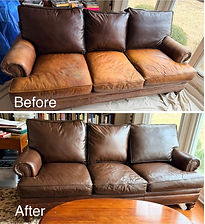
Most leather and vinyl furniture damage is repairable on-site — without removing the piece from your home. We come to you, work directly on the furniture, and complete most repairs in a single visit. A full matching set — sofa, loveseat, chairs, ottoman — is restored in one day with consistent color across every piece.
Prime Leather Fix repairs leather, aniline leather, and vinyl furniture across Northeast Florida. This page covers individual furniture repair. For all home furniture services, visit our Home Leather & Vinyl Furniture Repair page.
Types of Damage We Repair
We repair cuts, tears, holes, punctures, deep cuts, surface cracks, peeling, pet scratches, fading, discoloration, stains, worn armrests, sagging cushions, and seam separation on leather and vinyl furniture. For seam separation specifically — split seams, open stitching, torn seam lines — see our Split Seam Repair page. For chairs and bar stools requiring full seat replacement, see Chair Reupholstery.
Leather, Aniline Leather, and Vinyl — What We Work With

Different types of leather behave differently when damaged, and each requires a different approach to repair.
-Pigmented leather is the most common upholstery leather in modern furniture. The surface is coated with a pigmented finish that gives it color and protects it from wear. This finish makes pigmented leather easier to clean and easier to repair — color can be matched, scratches filled, and surface damage rebuilt without exposing the underlying hide.
-Aniline and semi-aniline leather are premium materials used in higher-end furniture. They are dyed all the way through rather than coated on top, which gives them a soft, natural look and makes the grain visible. This is also what makes them more difficult to repair. Aniline absorbs everything — water, oils, ink, sunscreen — and damage on the surface often goes deeper into the fiber. Color matching is more demanding, because the dye penetrates the entire piece rather than sitting on the surface. We work with aniline carefully and explain honestly what level of restoration is realistic before starting.
-Vinyl furniture behaves differently again. Vinyl is a synthetic material that does not absorb the way leather does, but it can crack, split, peel, and lose color from UV exposure or use. Vinyl repairs require techniques specifically suited to plastic surfaces — different fillers, different adhesives, different color systems.
We are equipped to work with all three categories — pigmented leather, aniline and semi-aniline leather, and vinyl — and we explain what is and is not realistic for the specific material before any work begins.
How We Repair Holes and Cuts — The Invisible Seam Technique
Holes, deep cuts, and large punctures are the most demanding repairs on leather and vinyl furniture. A standard fill or patch on this kind of damage rarely holds — the area continues to wear, the patch lifts at the edges, and the repair becomes visible within months. We use hand techniques for achieving virtually invisible results when repairing tears, punctures, and cuts — particularly in instances where other repair methods cannot guarantee the strength and usability of the damaged area. The repair is done at the source rather than masked over, which preserves the structural integrity of the leather or vinyl and keeps the area usable under regular wear. This is the work that separates a family-run repair business from a quick-fix approach. It takes time, hands-on skill, and the right materials. It is also why most of our clients come back for second projects and refer their family and friends.
Leather Color Restoration
Color is often the first thing to go on leather furniture. Sun exposure fades it, body oils discolor armrests and seat cushions, and decades of use shift the original tone. Color restoration brings the original look back without replacing the leather.
The work involves cleaning the surface to remove oils and residue, preparing the leather to accept new color, mixing pigment to match the original tone exactly, and applying the color in thin layers so the texture and grain remain visible. The final step is a protective finish that locks the color in and matches the original sheen — matte, satin, or gloss.
Color restoration works on pigmented leather, semi-aniline leather, aniline leather and vinyl. But aniline leather is more limited because the dye sits inside the fiber. We explain what is realistic before any color work begins.
Why a Family Business Restores a Full Set in One Day
A full residential set — sofa, loveseat, chairs, ottoman — is rarely repaired evenly by a solo technician because each piece is a separate appointment. We work as a family team, which means all pieces are restored together in a single session. Color matching, cleaning, surface work, and protective finish all happen under the same conditions on the same day — which is the only way to achieve consistent results across a full set.
What to Send Us for an Estimate
Send clear photos of the full piece and close-ups of the damaged areas. For the leather type, a photo of the label on the underside of the cushion helps. Include your location in Northeast Florida and describe the damage briefly.
Send photos by Text to (904) 979-1317 or email — we respond with an honest assessment and estimate, typically within 24 hours.
Serving Homes Across Northeast Florida
Prime Leather Fix provides on-site leather and vinyl furniture repair to homeowners throughout Northeast Florida, including St. Augustine, St. Augustine Beach, Vilano Beach, Crescent Beach, Ponte Vedra Beach, Nocatee, Fruit Cove, St. Johns, Flagler Beach, Daytona Beach, Palm Coast, and Jacksonville. We come directly to the home — no transport, no drop-off, no shop visit required.
FAQ
Q: Can deep cuts and holes really be repaired without replacing the whole piece?
A: Yes — most deep cuts, holes, and punctures can be repaired without replacing the upholstery when the surrounding material is still in good condition. The work is done by hand at the damaged area, blending the repair with the original surface. The result is structurally sound and visually consistent with the rest of the furniture. Replacement makes more sense when damage spreads across multiple sections of the same piece — this also applies to pet bite damage, where the volume of damage makes leather replacement the more practical solution.
Q: How do you match the color of aged leather that has changed tone over time?
A: Color matching is done in person, not from a photo. We compare pigment samples directly to the leather under natural light, mix the pigment to the current tone of the piece, and test the match on a hidden area before applying it to the visible surface.
Q: Will the repair look the same six months from now?
A: When the damage is repaired at the source rather than masked over, and when the protective finish is applied correctly, the repair holds up under regular use. Color, texture, and structural integrity remain consistent. The repair area wears at the same rate as the surrounding leather. Issues only appear with improper upholstery care or rough handling.
Q: Do you work on furniture that has been previously repaired by someone else?
A: Yes, but it depends on what was done before. In many cases, previous repairs no longer affect the quality of the intended work.
Q: How long does a typical home furniture repair take?
A: Most single-piece repairs are completed in one visit, ranging from one to three hours depending on the type and extent of damage. A full residential set — sofa, chairs, ottoman — usually takes a single full day with our family team working together.