Call us:
(630) 730-9959
Split Seam Repair on Leather and Vinyl Furniture
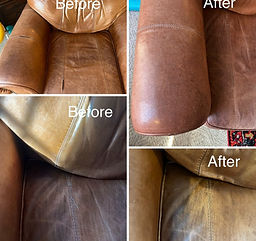
A split seam is one of the most common failures on leather and vinyl furniture. The leather itself is often still in good condition — the surface has not cracked, the color has not faded, the cushion is still firm — but the stitching has come apart, and what looked like a small opening turns into an expanding tear with continued use. Prime Leather Fix repairs split seams on sofas, sectionals, armchairs, ottomans, and dining chairs using hand stitching technique. The repair is done at the seam line itself. This page covers seam repair specifically. For information about all types of furniture damage we work with, visit our Furniture Repair page.
Split seam repair restores torn stitching on leather and vinyl furniture without replacing the upholstery panels. The repair is performed by hand along the original seam line, using thread that matches the existing stitching in color, weight, and stitch length. Done correctly, the result is visually identical to the factory seam and holds up under continued use. Common locations for split seams are armrests, seat-to-back joints, cushion edges, and bolster seams — all areas under repeated stress.
Why Seams Split on Leather and Vinyl Furniture
Seam failure is rarely a sudden event. It develops over time through a combination of stress, material aging, and small flaws in the original construction.
The most common cause is mechanical stress on areas that flex during use — armrests where the elbow rests, the seat-to-back junction where weight shifts, cushion edges where people sit down and stand up, bolster seams that compress repeatedly. Every cycle puts tension on the thread, and over years the thread fatigues. The second cause is thread degradation.
The thread used in upholstery construction is exposed to the same conditions as the leather — body oils, sunscreen residue, cleaning products, UV exposure. Synthetic threads break down chemically, natural threads break down biologically, and either way the strength of the seam decreases over time.
The third cause is the leather or vinyl shifting around the seam. As leather ages it can stretch, shrink, or stiffen. As vinyl ages it can become brittle. When the material around the seam moves and the thread does not, the thread eventually pulls through or snaps.
Once a seam has split, continued use almost always makes it worse. Each sit on the cushion, each lean on the armrest, each shift of position widens the opening.
This is why early seam repair is much simpler and less expensive than waiting until the panel itself is damaged.
How We Repair Split Seams — Hand Stitching Along the Original Line
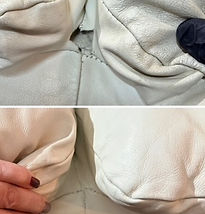
Split seam repair on upholstered furniture cannot be done with a sewing machine. The piece is fully assembled — the panels are attached to a frame, foam, and inner construction — and access to the back side of the seam is impossible without disassembly. Hand stitching is the only way the work can be done in place.
We use a curved upholstery needle and thread matched to the existing stitching in color, weight, and stitch length. The repair follows the original seam holes wherever possible, so the new stitches sit exactly where the factory stitches were. When the original holes are damaged, we use the existing stitch pattern as a guide for new placement, keeping the spacing consistent with the rest of the seam.
The thread is locked at the start and end of the repair so it cannot unravel later, and the tension is matched to the surrounding stitching so the repaired section sits flat with the rest of the seam. Done correctly, the repaired area is visually indistinguishable from the original factory work.
For damage that extends beyond the seam itself — when the leather or vinyl panel has torn away from the stitching line, or when the seam edge is frayed — additional reinforcement is built into the repair before stitching. We assess this from photos and explain the scope before starting.
Where Seam Repair Works and Where It Does Not
Hand stitching restores a seam back to working condition when the surrounding leather or vinyl is still structurally sound. If the panels themselves are intact, the foam underneath is still firm, and the only failure is the thread — seam repair is the right solution and the result holds up under continued use.
Seam repair is not the right solution when the leather or vinyl around the seam has cracked, frayed, or torn away from the stitch line over a wide area. In that case the underlying material can no longer hold new stitches, and the repair will pull out under the first significant load. Replacement of the panel — partial reupholstery — becomes the correct path, and we explain this honestly when we see it in the photos.
There is also a middle case — minor edge fraying along part of the seam, with the rest of the panel still strong. In that case we reinforce the frayed section before stitching, and the seam repair holds. We assess this from photos before scheduling the visit.
What to Send Us for an Estimate
Seam repair pricing depends on three things: the length of the split, the location on the furniture, and the condition of the material around the seam.
Photos let us assess all three before scheduling.
Useful photos include the full seam from one end of the split to the other, a close-up of the most open part of the seam where you can see inside, and a wider shot of the surrounding panel so we can see the condition of the leather or vinyl on either side of the seam line.
Send photos by text to (630) 730-9959 or by email to primeleatherfix@gmail.com. We respond with an honest assessment and estimate, typically within 24 hours.
Serving Homes and Businesses Across Northeast Florida
Prime Leather Fix repairs split seams on residential and commercial leather and vinyl furniture across Northeast Florida, including St. Augustine, St. Augustine Beach, Vilano Beach, Crescent Beach, Ponte Vedra Beach, Nocatee, Fruit Cove, St. Johns, Flagler Beach, Daytona Beach, Palm Coast, and Jacksonville.
Service is mobile — we come directly to the home or business, no drop-off required.
Split Seam Repair — FAQ
Q: Can a split seam be repaired without disassembling the furniture?
A: Yes. Hand stitching with a leather needle is performed in place, with the furniture fully assembled. There is no need to remove cushions from the frame, take panels off, or disassemble any part of the construction. Most seam repairs are completed in a single visit at your home or business
Q: Will the new stitching match the original?
A: Thread is matched to the existing stitching in color, weight, and stitch length before the work begins. The repair follows the original seam line, using the existing stitch holes wherever they are intact. Done this way, the repaired section is visually consistent with the rest of the seam — most people cannot identify the repaired area unless they know exactly where to look.
Q: How long does a typical seam repair take?
A: A single split of moderate length — typically four to eight inches — takes one to two hours of on-site work. Longer splits, multiple seams in the same visit, or repairs that require reinforcement of frayed material take additional time.
Q: Will the repaired seam hold up if I keep using the furniture the same way?
A: A correctly stitched repair holds up under the same use as the original seam — provided the surrounding leather or vinyl is still in good condition. The new thread is selected for upholstery use, locked at both ends, and tensioned to match the rest of the seam. The repaired section wears at the same rate as the surrounding stitching. If the original seam failed because of an unusual stress (a pet repeatedly digging at the same spot, for example), the same cause will eventually affect the new repair as well.
Q: My seam has split in several places along the same line — can it all be repaired at once?
A: Yes. Multiple splits along the same seam line are repaired in a single continuous pass, which produces a cleaner final result than treating each split as a separate fix. The repair runs the full length of the affected seam, using the original seam holes wherever possible and matching the rest of the line in tension and spacing.
Split Seam Repair on Leather and Vinyl Furniture

A split seam is one of the most common failures on leather and vinyl furniture. The leather itself is often still in good condition — the surface has not cracked, the color has not faded, the cushion is still firm — but the stitching has come apart, and what looked like a small opening turns into an expanding tear with continued use. Prime Leather Fix repairs split seams on sofas, sectionals, armchairs, ottomans, and dining chairs using hand stitching technique. The repair is done at the seam line itself. This page covers seam repair specifically. For information about all types of furniture damage we work with, visit our Furniture Repair page.
Split seam repair restores torn stitching on leather and vinyl furniture without replacing the upholstery panels. The repair is performed by hand along the original seam line, using thread that matches the existing stitching in color, weight, and stitch length. Done correctly, the result is visually identical to the factory seam and holds up under continued use. Common locations for split seams are armrests, seat-to-back joints, cushion edges, and bolster seams — all areas under repeated stress.
Why Seams Split on Leather and Vinyl Furniture
Seam failure is rarely a sudden event. It develops over time through a combination of stress, material aging, and small flaws in the original construction.
The most common cause is mechanical stress on areas that flex during use — armrests where the elbow rests, the seat-to-back junction where weight shifts, cushion edges where people sit down and stand up, bolster seams that compress repeatedly. Every cycle puts tension on the thread, and over years the thread fatigues. The second cause is thread degradation.
The thread used in upholstery construction is exposed to the same conditions as the leather — body oils, sunscreen residue, cleaning products, UV exposure. Synthetic threads break down chemically, natural threads break down biologically, and either way the strength of the seam decreases over time.
The third cause is the leather or vinyl shifting around the seam. As leather ages it can stretch, shrink, or stiffen. As vinyl ages it can become brittle. When the material around the seam moves and the thread does not, the thread eventually pulls through or snaps.
Once a seam has split, continued use almost always makes it worse. Each sit on the cushion, each lean on the armrest, each shift of position widens the opening.
This is why early seam repair is much simpler and less expensive than waiting until the panel itself is damaged.
How We Repair Split Seams — Hand Stitching Along the Original Line

Split seam repair on upholstered furniture cannot be done with a sewing machine. The piece is fully assembled — the panels are attached to a frame, foam, and inner construction — and access to the back side of the seam is impossible without disassembly. Hand stitching is the only way the work can be done in place.
We use a curved upholstery needle and thread matched to the existing stitching in color, weight, and stitch length. The repair follows the original seam holes wherever possible, so the new stitches sit exactly where the factory stitches were. When the original holes are damaged, we use the existing stitch pattern as a guide for new placement, keeping the spacing consistent with the rest of the seam.
The thread is locked at the start and end of the repair so it cannot unravel later, and the tension is matched to the surrounding stitching so the repaired section sits flat with the rest of the seam. Done correctly, the repaired area is visually indistinguishable from the original factory work.
For damage that extends beyond the seam itself — when the leather or vinyl panel has torn away from the stitching line, or when the seam edge is frayed — additional reinforcement is built into the repair before stitching. We assess this from photos and explain the scope before starting.
Where Seam Repair Works and Where It Does Not
Hand stitching restores a seam back to working condition when the surrounding leather or vinyl is still structurally sound. If the panels themselves are intact, the foam underneath is still firm, and the only failure is the thread — seam repair is the right solution and the result holds up under continued use.
Seam repair is not the right solution when the leather or vinyl around the seam has cracked, frayed, or torn away from the stitch line over a wide area. In that case the underlying material can no longer hold new stitches, and the repair will pull out under the first significant load. Replacement of the panel — partial reupholstery — becomes the correct path, and we explain this honestly when we see it in the photos.
There is also a middle case — minor edge fraying along part of the seam, with the rest of the panel still strong. In that case we reinforce the frayed section before stitching, and the seam repair holds. We assess this from photos before scheduling the visit.
What to Send Us for an Estimate
Seam repair pricing depends on three things: the length of the split, the location on the furniture, and the condition of the material around the seam.
Photos let us assess all three before scheduling.
Useful photos include the full seam from one end of the split to the other, a close-up of the most open part of the seam where you can see inside, and a wider shot of the surrounding panel so we can see the condition of the leather or vinyl on either side of the seam line.
Send photos by text to (630) 730-9959 or by email to primeleatherfix@gmail.com. We respond with an honest assessment and estimate, typically within 24 hours.
Serving Homes and Businesses Across Northeast Florida
Prime Leather Fix repairs split seams on residential and commercial leather and vinyl furniture across Northeast Florida, including St. Augustine, St. Augustine Beach, Vilano Beach, Crescent Beach, Ponte Vedra Beach, Nocatee, Fruit Cove, St. Johns, Flagler Beach, Daytona Beach, Palm Coast, and Jacksonville.
Service is mobile — we come directly to the home or business, no drop-off required.
Split Seam Repair — FAQ
Q: Can a split seam be repaired without disassembling the furniture?
A: Yes. Hand stitching with a leather needle is performed in place, with the furniture fully assembled. There is no need to remove cushions from the frame, take panels off, or disassemble any part of the construction. Most seam repairs are completed in a single visit at your home or business
Q: Will the new stitching match the original?
A: Thread is matched to the existing stitching in color, weight, and stitch length before the work begins. The repair follows the original seam line, using the existing stitch holes wherever they are intact. Done this way, the repaired section is visually consistent with the rest of the seam — most people cannot identify the repaired area unless they know exactly where to look.
Q: How long does a typical seam repair take?
A: A single split of moderate length — typically four to eight inches — takes one to two hours of on-site work. Longer splits, multiple seams in the same visit, or repairs that require reinforcement of frayed material take additional time.
Q: Will the repaired seam hold up if I keep using the furniture the same way?
A: A correctly stitched repair holds up under the same use as the original seam — provided the surrounding leather or vinyl is still in good condition. The new thread is selected for upholstery use, locked at both ends, and tensioned to match the rest of the seam. The repaired section wears at the same rate as the surrounding stitching. If the original seam failed because of an unusual stress (a pet repeatedly digging at the same spot, for example), the same cause will eventually affect the new repair as well.
Q: My seam has split in several places along the same line — can it all be repaired at once?
A: Yes. Multiple splits along the same seam line are repaired in a single continuous pass, which produces a cleaner final result than treating each split as a separate fix. The repair runs the full length of the affected seam, using the original seam holes wherever possible and matching the rest of the line in tension and spacing.